Informal science centers, like The Marine Mammal Center, serve as a valuable platform for connecting visitors with nature and inspiring positive environmental action towards climate change. Currently, only 17% of people in the US hear about climate change from someone they know once a month or more, establishing an unproductive spiral of silence on the topic of climate change.
However, 70% of visitors to informal science centers, like zoos, aquariums and museums, identify they want more information on climate change and recommendations on how to address climate change. The Center, the world’s largest marine mammal hospital and education facility, has found that sharing the unique stories of specific marine mammal patients, including those directly or indirectly harmed by human activities, makes a deep impact on children and adults alike, making marine mammals effective message ambassadors. By sharing these stories in an active teaching and research hospital, accompanied by interaction with highly regarded scientists, veterinarians, and trained volunteers, we are able to provide both inspiration and empowerment for how our audiences can become the environmental heroes of their local communities.
Through collaborative efforts such as serving as the fiscal sponsor and key training partner of the National Network for Ocean and Climate Change Interpretation (NNOCCI) and leading the Climate Literacy Collaborative, the Center has grounded climate communications in the best practices of both climate science and social psychology. Our patients provide a captivating storytelling vessel to engage audiences in both the current impacts of climate change, as well as the future impacts if we don’t act on reducing fossil fuels today.
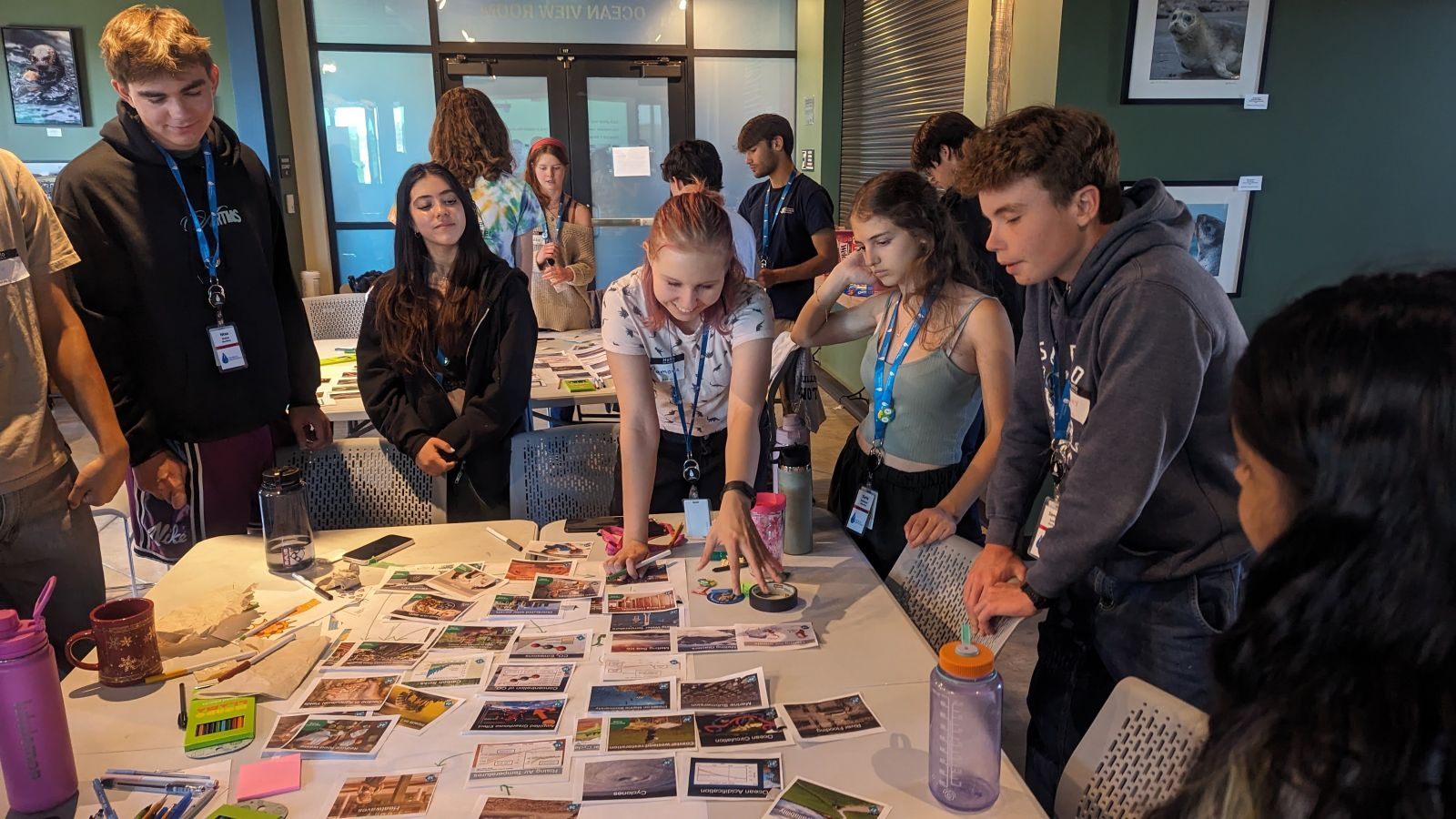
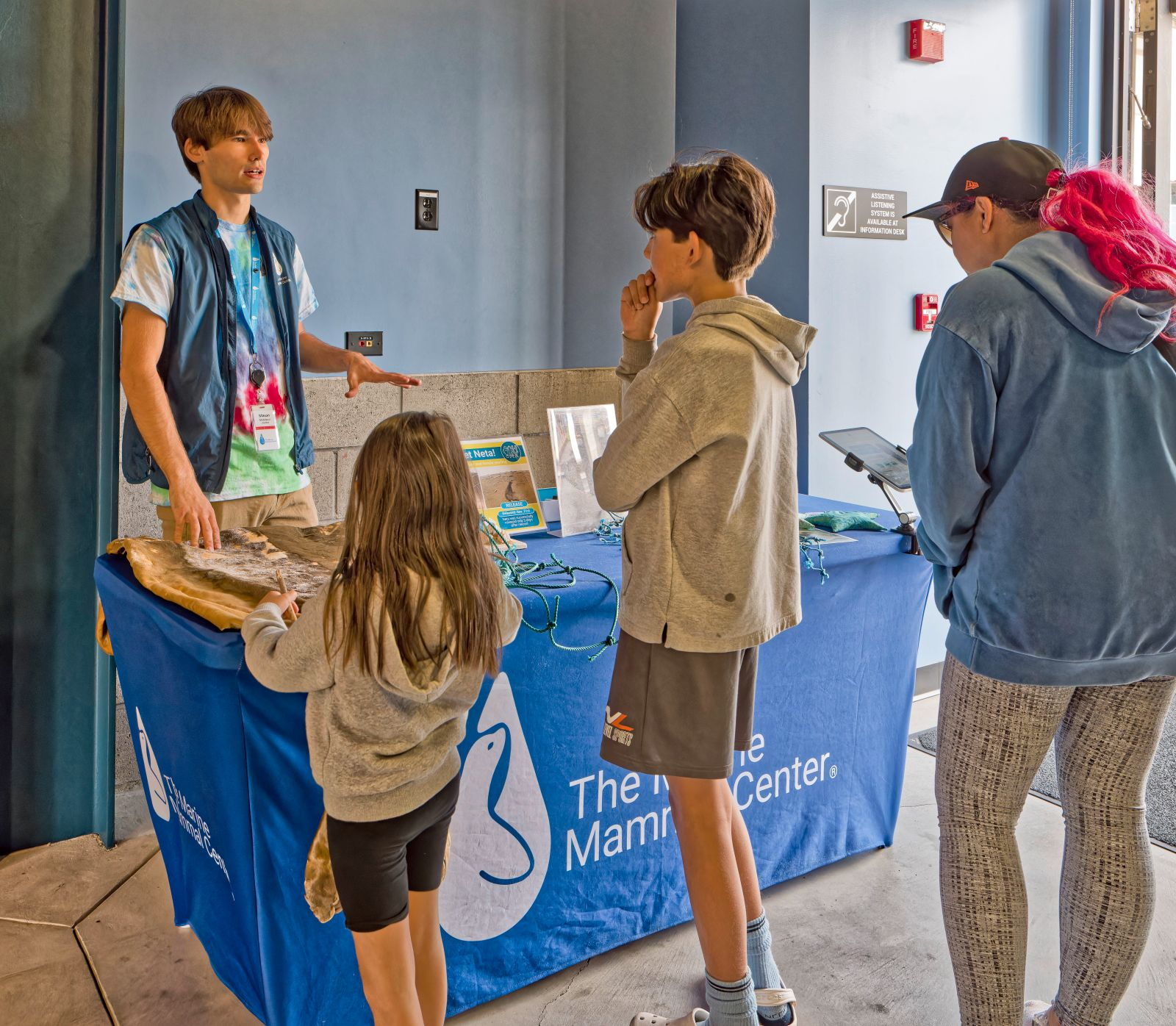
In 2024, high school volunteers at The Marine Mammal Center engaged in a service-learning program putting them on the frontlines of communicating about marine mammal threats and conservation actions in their local communities. Youth Crew members learned the science of climate change and NNOCCI tools for communicating climate science effectively, and logged their conservation actions through an interactive, custom mobile application (GetGreen) allowing them to track their carbon emission offsets. Through interactive exhibits at the public-facing hospital, Youth Crew members engaged over 7,400 visitors and encouraged nearly 600 pledges for conservation actions. In total, over 1,700
recorded actions equated to the reduction of 18 metric tons of carbon dioxide being released into the atmosphere. Evaluative surveys showed youth significantly increased their comfort and frequency of environmental conversations in their personal lives and increased their belief that they could have a positive impact through their own actions and increasing communication about these critical environmental topics to others. This work was recently published in the International Zoo Educators Journal and can be viewed at: Mobilizing High School Volunteers as Conservation Ambassadors.
The Center is so fortunate to play a leading role within the NNOCCI network and collaborate with so many wonderful organizations as we all work to shift the conversation on climate change to be more positive, solutions-focused and community-minded.
 To Frame Climate Change, Lead with a Researched Value—Not a “Rogue” OneTo Frame Climate Change, Lead with a Researched Value—Not a “Rogue” One January 20 2017 This is the sixth post in a series about framing ocean and climate change. So, you want to motivate the public to take action to address climate and ocean change? One of the most important communications moves you can make is to open with a broad statement [READ MORE]
 Museums Mobilizing Climate ActionMuseums Mobilizing Climate Action Billy Spitzer, August 06 2018 (Excerpted from a commencement speech for the Harvard Extention School Museum Studies Program) The Role of Museums In Tackling Climate Change At the New England Aquarium, I spend most of my time working at the intersection of museums and sustainability. About 10 years ago, we realized [READ MORE]
 California Marine Life Feeling the Heat of Climate ChangeCalifornia Marine Life Feeling the Heat of Climate Change By Lisa Marie Potter, February 18 2016 Monterey Bay is home to an astonishing array of marine life, from kelp forests to sea otters to migrating whales. The secret to its productivity: the California Current. Monterey Bay’s rich ecosystem naturally varies in response to physical changes in [READ MORE]
 Metaphors Can Counter Misinformation about Climate ChangeMetaphors Can Counter Misinformation about Climate Change December 02 2016 This is the fifth post in a series about framing ocean and climate change. Our ability to communicate the science of climate change to the public is as important as ever. The outcome of the recent presidential and congressional elections and the state of public discourse [READ MORE]
 Thinking Bigger On SolutionsThinking Bigger On Solutions by Allison Arteaga, February 28 2020 We all know that we need big, systems-level change in our society in order to address climate change and create a better future. This requires high-impact collective actions that create change at the cultural and public levels by bringing people together (Frameworks). The challenge [READ MORE]