Informal science centers, like The Marine Mammal Center, serve as a valuable platform for connecting visitors with nature and inspiring positive environmental action towards climate change. Currently, only 17% of people in the US hear about climate change from someone they know once a month or more, establishing an unproductive spiral of silence on the topic of climate change.
However, 70% of visitors to informal science centers, like zoos, aquariums and museums, identify they want more information on climate change and recommendations on how to address climate change. The Center, the world’s largest marine mammal hospital and education facility, has found that sharing the unique stories of specific marine mammal patients, including those directly or indirectly harmed by human activities, makes a deep impact on children and adults alike, making marine mammals effective message ambassadors. By sharing these stories in an active teaching and research hospital, accompanied by interaction with highly regarded scientists, veterinarians, and trained volunteers, we are able to provide both inspiration and empowerment for how our audiences can become the environmental heroes of their local communities.
Through collaborative efforts such as serving as the fiscal sponsor and key training partner of the National Network for Ocean and Climate Change Interpretation (NNOCCI) and leading the Climate Literacy Collaborative, the Center has grounded climate communications in the best practices of both climate science and social psychology. Our patients provide a captivating storytelling vessel to engage audiences in both the current impacts of climate change, as well as the future impacts if we don’t act on reducing fossil fuels today.
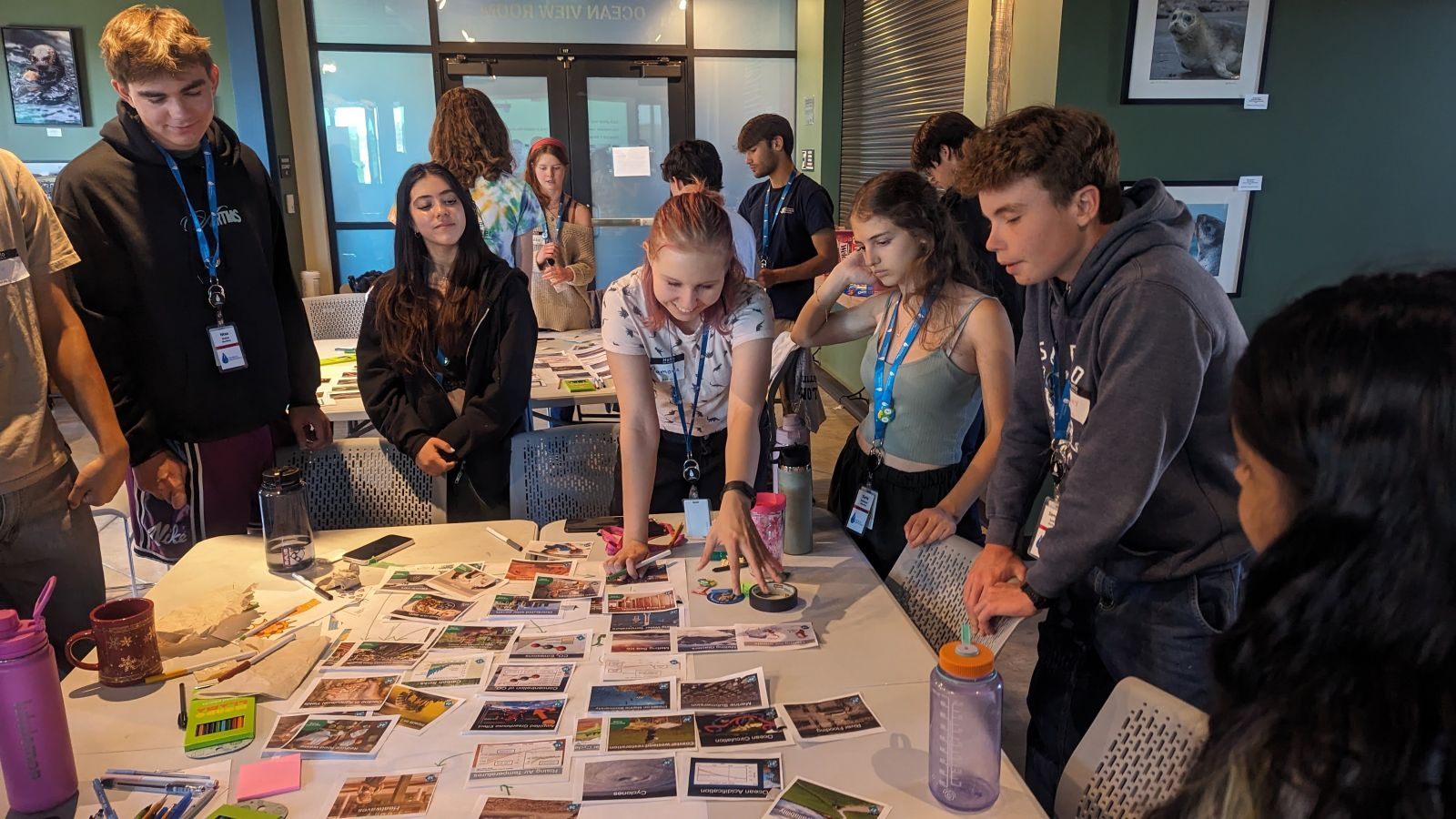
In 2024, high school volunteers at The Marine Mammal Center engaged in a service-learning program putting them on the frontlines of communicating about marine mammal threats and conservation actions in their local communities. Youth Crew members learned the science of climate change and NNOCCI tools for communicating climate science effectively, and logged their conservation actions through an interactive, custom mobile application (GetGreen) allowing them to track their carbon emission offsets. Through interactive exhibits at the public-facing hospital, Youth Crew members engaged over 7,400 visitors and encouraged nearly 600 pledges for conservation actions. In total, over 1,700
recorded actions equated to the reduction of 18 metric tons of carbon dioxide being released into the atmosphere. Evaluative surveys showed youth significantly increased their comfort and frequency of environmental conversations in their personal lives and increased their belief that they could have a positive impact through their own actions and increasing communication about these critical environmental topics to others. This work was recently published in the International Zoo Educators Journal and can be viewed at: Mobilizing High School Volunteers as Conservation Ambassadors.
The Center is so fortunate to play a leading role within the NNOCCI network and collaborate with so many wonderful organizations as we all work to shift the conversation on climate change to be more positive, solutions-focused and community-minded.
 Connecting Higher Ed. And Public EducationConnecting Higher Ed. And Public Education by Richelle Tanner, May 09 2019 Public and higher education traditionally exist in separate spheres. And for good reason – there are different assumptions of prior knowledge, and different goals for informal educators vs. academic researchers. However, when it comes to highly-polarized, unfortunately [READ MORE]
 My Community is My Hope #100HopefulDaysMy Community is My Hope #100HopefulDays Sarah-Mae Nelson, MS, CIG/CIT, February 03 2017 Today I turn 37 years old. This seems like an impossible number. In my mind, I am a vibrant 21-year-old eager to make the world a better place. I see opportunities to make a positive difference everywhere. I am young, I am empowered, and I am unstoppable. In [READ MORE]
- Youth Climate Summit: Building Skills, Hope, and Climate Solutions TogetherOn November 8, our Education Department co-hosted our first Youth Climate Summit with the Rhode Island Environmental Education Association (RIEEA), bringing together 53 youth and 11 adult mentors from 11 schools and organizations for a day of learning, connection, and action around climate change.[READ MORE]
 Friendly neighborhood climate scientistFriendly neighborhood climate scientist by Jeremy Owens, March 23 2020 Have you ever wanted or even needed a climate science question answered but couldn’t find an answer and you wanted to speak with a scientist? Have you wanted to work with a scientist to do outreach but didn’t know how to contact someone? If you have ever had a need but felt [READ MORE]
 The Right Message from the Right MessengerThe Right Message from the Right Messenger Allison Arteaga, December 20 2017 The National Network for Ocean & Climate Change Interpretation (NNOCCI) has some exciting news for climate change communicators! Those of you who have received training in Strategic Framing® techniques through the network may recall collecting pre- and post- training [READ MORE]