From Course to Conversation:
A Climate Story on Kelp Forests
Words & Photography by Haley R. Pope

The National Network for Ocean and Climate Change Interpretation (NNOCCI) is a network of individuals and organizations using evidence-based communication methods to shift the national conversation about climate change toward productive, civic-minded, and solutions-focused dialogue. To support this mission, NNOCCI offers training courses that equip participants with skills to increase public understanding of climate change, its impacts on the ocean, and the actions we can take together to address it.
One of these courses is NNOCCI’s Framing the Conversation: A ‘Crash Course’ in Effective Climate Change Communication — a seven-week online training focused on developing strategic framing skills. Participants learn why framing matters and how to effectively communicate using evidence-based strategic framing tools, such as values, metaphors, and local, collective solutions, with the final goal of putting these tools into practice by crafting their own climate story.
I joined the Crash Course in the fall of 2024, motivated by my roles as a volunteer naturalist at my local marine life center and as a member of NNOCCI’s Governing Council. As an avid nature photographer with a background in marine ecology, I love telling inspiring stories about wildlife and conservation. I chose to write my climate story, recounted below, to inspire conversations I have with visitors to the marine center about how climate change affects kelp forests, our deep connection to the ocean, and our shared responsibility to protect its health.
The accompanying underwater photographs add a touch of whimsy and are the inspiration for this piece. See the full gallery on my website.
How climate change affects kelp forests
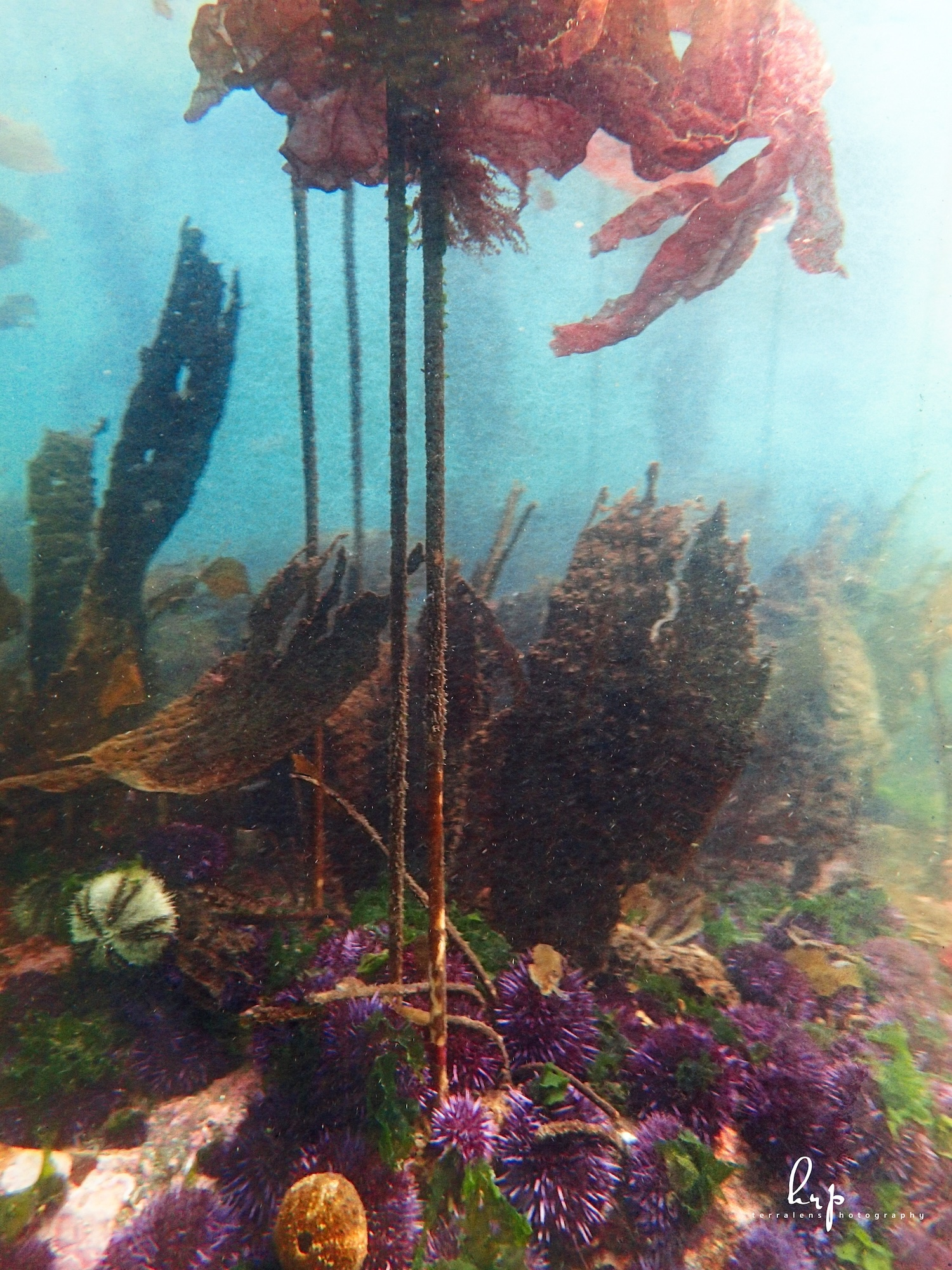
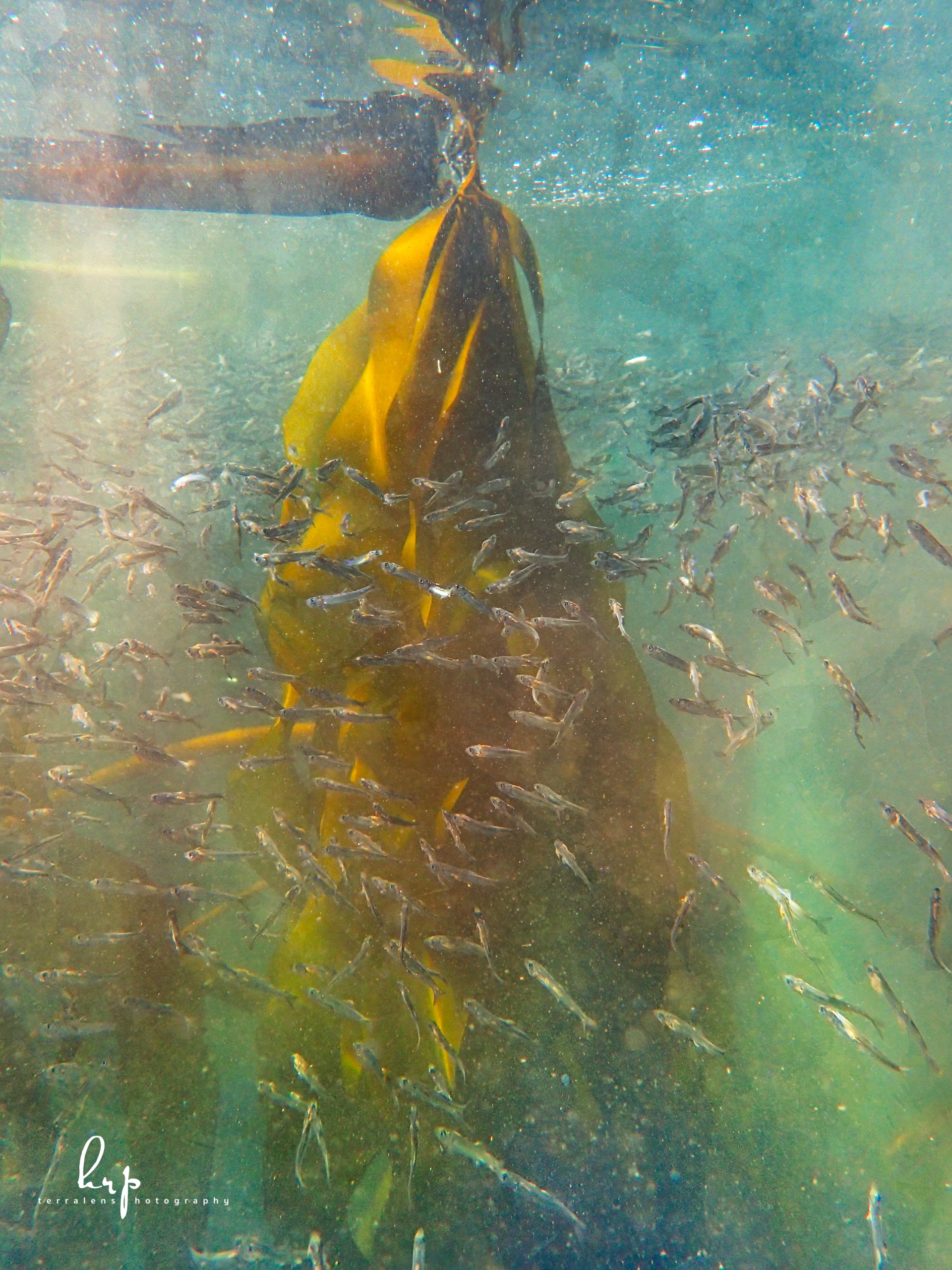
All of the animals you will see and interact with today call the kelp forest home. Just as terrestrial forests are essential for the existence of wildlife, so too are kelp forests. They provide food and protection to many of the animals here. Together with other marine algae, they also play a major role in producing the oxygen we breathe. In fact, marine photosynthetic organisms are responsible for around 50–70% of Earth’s oxygen production. Yet, climate change is threatening these ecosystems. The deep interconnectedness we share with each other and with the rest of nature places special importance on our duty to protect and preserve the habitats and ecosystems we all depend on.
Carbon dioxide (CO2) is a gas that is emitted through regular biological processes, such as when animals exhale, and absorbed by plants and algae during photosynthesis. However, humans are adding excess carbon dioxide to the air when we burn fossil fuels like oil, coal, or natural gas for energy or transportation. Burning fossil fuels contributes to rampant levels of CO2 in the atmosphere and ocean where it causes problems for the earth’s climate and ecosystems, including ocean acidification.
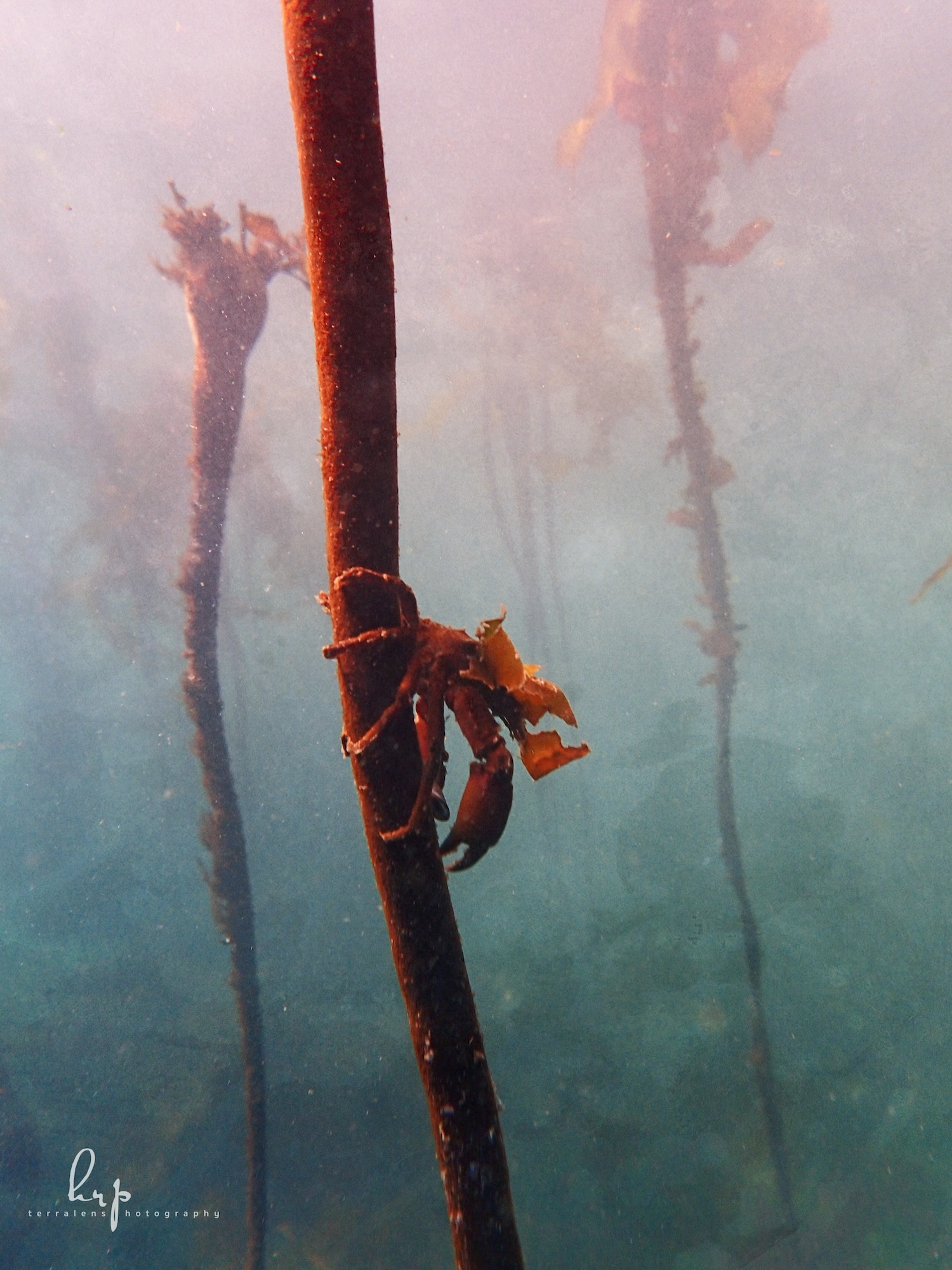
Ocean acidification is a change in the chemistry of the ocean that causes “osteoporosis of the sea,” preventing animals at the bottom of the food web from building and maintaining the protective shells they need to survive. The more acidic water particularly harms animals that rely on kelp like sea urchins, kelp crabs, and sea stars by slowing their growth, making them brittle, and even dissolving their shells and exoskeletons. Changes in ocean chemistry and temperature also threaten a kelp forest’s ability to grow and thus provide food and shelter for the animals that rely on them, especially when combined with other stressors. To protect both kelp forests and the species they support, we need to reduce emissions of rampant CO2 that drive climate change.
So, what can we do?
You don’t need to live near the coast to protect the ocean, kelp forests, or marine animals. Since the natural world is interconnected, any concrete steps we take to reduce our reliance on fossil fuels, especially as a community, ripple outward, benefiting the ocean, forests, wildlife, and people alike.
One major source of emissions is transportation. We can shop at local farmers markets to reduce the carbon footprint of long-distance food transport, while supporting our local economies, and take advantage of public transit options offered in many cities. Visit the National Farmers Market Directory to find a farmers market in your community.
Wherever you live, consider how your own community is reducing its reliance on fossil fuel and get involved. That might mean helping your community organize carpools, using and advocating for bike lanes, or supporting the expansion of public transit options or other local clean-energy initiatives. Our collective actions matter — and each of us has the power to inspire others to join the solution.
Want to build your own climate story?
Learn more about NNOCCI’s Crash Course and subscribe to the NNOCCI newsletter to find out when it’s offered next. After completing the course, you’ll gain new skills, access to member-only resources, and connection to NNOCCI’s large network of fellow hopeful, climate communicators.