Creating Community Action Plans with Friends of LA River Fellows from Anawakalmekak School
By Kait Birghenthal
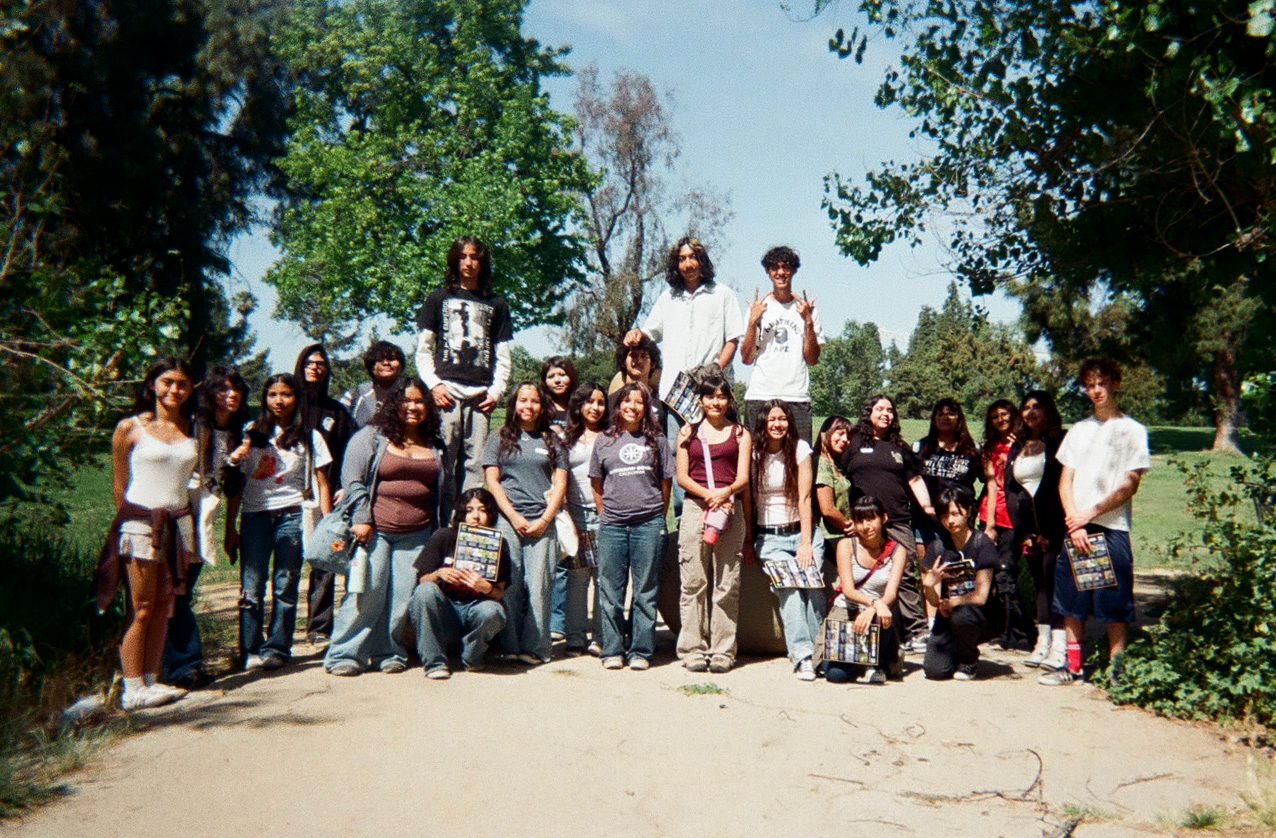
Since 2022, we have partnered with the Friends of LA River’s (FoLAR) ‘River Fellows’ program to provide a climate communication course for the students. In FoLAR’s own words, “[t]he River Fellows program is a paid workforce development initiative that provides River-adjacent youth with immersive outdoor experiences, exposure to green career pathways, and hands-on experience in restoration, advocacy, and environmental STEM”. Every year, the Fellows welcome a new cohort, and we are honored to be able to work with them to improve the quality and quantity of their climate conversations, encouraging them to identify their communities and create an action plan that they can bring to whatever community audience they have chosen.
This year, most cohort members came from Anawakalmekak, a Los Angeles-based school founded on Indigenous Resurgence Education. Anawakalmekak students receive “a comprehensive education that combines academic excellence, Native wisdom, and Indigenous heritage and history”. Through this lens, Fellows wove beautiful climate action plans to bring back to their communities, combining their learned experiences, communal knowledge, and newly acquired climate framing skills. In our time together, we asked the Fellows to identify who is being impacted and how, then identify who is already taking action, share how they are acting, and direct others to how to get involved in this climate action. Fellows addressed everything from a lack of green spaces causing worsening issues with extreme heat days, to loss of wildlife and homes during wildfires, to air quality issues. They highlighted civic programs like LA Department of Water and Power’s ‘Cool LA’, community advocacy groups like Amigos de los Rios and Climate Resolve, and Indigenous-led programs, like the land Anawakalmekak works to steward, the Chief Ya’anna Learning Village and Tuatukar Eco-Cultural Center.
Established on rematriated land of the Gabrielino-Shoshone Nation, the Learning Village and Eco-Cultural Center grounds a space for traditional and cultural learning, including lessons on how to care for the land, as it cares for us. Here, Anawakalmekak teaches students not just how to engage in traditional practices like building kiiys, dome-shaped dwellings, but also how to speak for and restore the remaining 5% of LA wetlands, so they can grow the tule reeds needed for the woven roofs.
Following the course, Fellows reported both increased willingness to talk about climate change with friends and family, as well as increased frequency in the number of conversations they’d had about climate change in the past 3 months. When asked how participating in the NNOCCI training helped them strengthen their hope and desire to act on climate at their school, Kaylee M shared, “The invaluable conversational skills I cultivated while undergoing NNOCCI training this past June and July have helped me better understand what my peers want to hear about climate change, and how to phrase what they don’t in a more constructive way. I would love to start a conservation club at my school and express my passion for the planet in a way that all students can get behind”.
It was truly inspiring to work with, and hear from, so many young leaders in the climate movement. We cannot wait to hear what they do next in their journeys and are grateful to FoLAR for the opportunity to work with them again this year.
While we know our research and toolkit were developed for an adult audience, the River Fellows from Anawakalmekak show us anecdotally, once again, that teens feel empowered, hopeful, and ready to act when they have the right framing tools and a community that embraces and supports them. “Participating in NNOCCI really helped me better my understanding of how to approach others with the topic of climate change. The point of informing others isn’t to just scare them because what good does that do? The point of informing people about climate change and its everlasting effects is to inspire people. Being able to inspire people is one of the greatest things you could do to help fight for a cause, bringing more voices, more minds, and bringing more change. Understanding your approach and bettering your skills to inspire is what I feel NNOCCI really did for me. They strengthened my hope because now I know that change will happen once the right people get inspired and start putting in their blood, sweat, and tears, and I know that NNOCCI has inspired me to put more of my time into focusing on climate resilience, especially within my school.” Thank you, Huitzilin R, for putting it so beautifully. We are honored to have been able to be even a small part of these incredible students’ budding, bright futures.